
Getting your first full paycheck is an incredible feeling—until you look closely at your payslip and spot a mysterious deduction called TDS (Tax Deducted at Source).
Suddenly, your hard-earned money is going to the government before you even get to touch it. But don’t panic! The government actually wants you to save and invest, and they reward you for doing so. The most popular way they do this is through a magic little clause called Section 80C.
What is Section 80C?
Simply put, Section 80C of the Income Tax Act allows you to reduce your taxable income by up to ₹1.5 Lakhs every year. If you invest your money in specific government-approved instruments, you don’t have to pay tax on that ₹1.5 Lakhs.
Depending on your tax slab, maximizing this section can save you thousands of rupees annually!
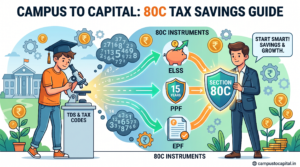
Top 3 Beginner-Friendly 80C Investments
Where should you put this money? Here are the three best options for a young professional:
1. ELSS (Equity Linked Savings Scheme)
-
What it is: A type of Mutual Fund that invests mostly in the stock market but comes with tax benefits.
-
The Lock-in: 3 years (the shortest lock-in period among all 80C options).
-
Why it’s great: It offers the highest potential for wealth creation over the long term. You can easily start a monthly SIP in an ELSS fund so you are saving taxes on autopilot!
2. EPF (Employees’ Provident Fund)
-
What it is: If you are a salaried employee, you and your employer are likely already contributing to this.
-
The Lock-in: Until retirement (though partial withdrawals are allowed for emergencies like medical needs or buying a house).
-
Why it’s great: You don’t have to do anything! Your contribution (usually 12% of your basic salary) is automatically deducted and earns a fixed, compounding interest rate guaranteed by the government.
3. PPF (Public Provident Fund)
-
What it is: A super-safe, government-backed savings scheme.
-
The Lock-in: 15 years.
-
Why it’s great: The returns you earn and the maturity amount are completely tax-free. It’s perfect for the highly conservative portion of your portfolio.
The biggest mistake beginners make is waiting until March to plan their taxes. The resulting panic leads to poor investment choices. Start an ELSS SIP in April, and your taxes will be sorted automatically by the end of the financial year.
Call to Action (CTA): At the end of the post, don’t just stop. Ask a question: “Which 80C investment are you leaning towards for this year? Let me know in the comments!”